
A close friend was celebrating twenty-five years with her husband, and we were reminiscing over text about how much the world had shifted since they met.
Twenty-five years ago was around 2001. We had indestructible Nokia brick cell phones and T9 texting, but carrying a phone was an entirely different experience of reality. A phone was an appliance. You hoarded your minutes until 9:00 PM when they were free. When you finished a call, you put the phone back in your purse. You lived with long stretches of quiet and the simple grace of not knowing where everyone was every second of the day.
As I looked at the distance between that tactile world and this one, I wrote:
We are the last of the non-digital.
The irony was sitting right there in my thumbs. We were two people marveling at the lost beauty of an untethered existence, yet our reflection was mediated entirely through glowing glass rectangles and cell towers.
We are not living in that analog world anymore, and pretending we can retreat into it is a fantasy. But as modern technology expands at a velocity that outpaces our ability to metabolize it, we have created an environment of profound cognitive dissonance that leaves our newest generation of workers stranded between our unexamined assumptions and our outdated institutions.
The Consumer Trap
For the past fifteen years or so, most organizational leaders have operated under a comfortable myth: Because younger workers grew up with screens, they must be digitally fluent.
We assume that living inside an ecosystem means knowing how it works. The generation entering the workforce today was handed consumer technology engineered to be entirely frictionless. Apple, under Steve Jobs, spent billions ensuring that users would never have to see a command line, manage a local file directory, understand a data protocol, or troubleshoot an operating system. Modern interfaces are designed to keep people inside walled gardens where every gesture is measured, predicted, and monetized.
These young adults did not fail to learn systems architecture; they were insulated from it. They were handed slot machines, not flight simulators.
By contrast, my generation had to understand how the machine functioned just to make it run. To get online in 1996, when I bought my first Gateway PC, I had to configure hardware, diagnose connection failures, and understand where files lived on a physical drive. That frustrating friction built a durable mental model of systems logic.
When we call modern young adults “digital natives,” we flatter ourselves into thinking we gave them a head start. In reality, we gave them black boxes they were never taught to take apart.
The Industrial Hangover
This deficit hits an immediate dead end in workplaces still nursing an industrial hangover.
Knowledge work remains organized around the factory clock. We pay people by the hour and evaluate performance by visible seat time. The entire system rewards friction: typing out emails keystroke by keystroke, manually reformatting spreadsheets, and spending full days on clerical busywork that signals value.
When modern tools make it possible to compress an eight-hour clerical backlog into twenty minutes of high-level synthesis, legacy management structures freeze. If an organization measures value by elapsed time, high-leverage work looks like cutting corners, and spending all day on administrative minutiae looks like dedication.
The whole setup makes no sense. In school, using modern tools is treated like cheating, and students are rewarded for taking the longest, slowest path possible. Then they enter the workforce, where bosses assume they are computer geniuses, offer zero training, and quietly punish them for finishing early because the company still pays by the hour. We expect young people to survive the wild west of modern tech while judging them on old factory habits.
A Two-Way Street
It is easy for older generations to slip into a tired routine: rolling our eyes at screen habits or grumbling when an entry-level worker cannot find a document saved to their own drive. You know the drill…
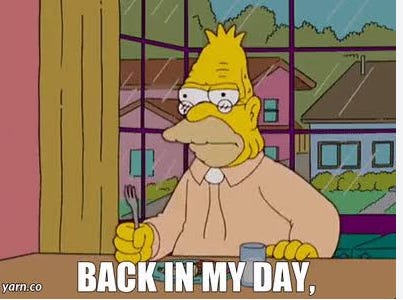
But that critique misses the mark entirely.
If this exchange only flows in one direction, it isn’t leadership; it’s just a tired lecture. And the generation coming up behind us has plenty to teach us about the reality of living inside the machine.
They have a better built-in BS detector than any generation before them. After spending their entire lives swimming through targeted ads, sponsored content, and algorithmic sales pitches, they can spot performative nonsense from a mile away. When they push back against sitting in an office chair for eight hours just to look busy, they aren’t being lazy. They just refuse to play along with an obvious charade. In the process, they force the rest of us to admit how much time we waste doing things the hard way just to look productive.
They also know firsthand what it feels like to spend their formative years under a digital microscope. While older adults study screen addiction and tech habits from a safe, theoretical distance, younger people have lived the constant stress of being watched, scored, and recorded since middle school. They know where the water is toxic because they grew up swimming in it.
The real goal is not to lecture them about how great life was before the internet, nor is it to throw up our hands and let phone apps run the workplace. The real work is meeting in the middle. We need to throw out the obsolete factory habits that waste their time, pull back the curtain on how modern software actually works under the hood, and build an environment that values real human insight over mindless busywork.
Yet if the cost of this dissonance is so clear, why are we so stubbornly terrified of engaging with it?
Why do school boards, corporate policies, and community leaders cling so desperately to magnetic pouches, digital firewalls, and total prohibition?
To understand that, we have to look directly at our own generation: at the grief, the fear of obsolescence, and the quiet panic of being the last people who remember what the world felt like before the lights were turned on.
(Next up in Part 2: The Psychology of the Pouch: why we retreat into prohibition, the realities of synthetic information warfare, and how to build cognitive firewalls instead of locked gates.)