
I had a rolling suitcase behind me and a shoulder bag slowly carving a groove into my collarbone.
You know the feeling.
You’ve been traveling all day. The hallway carpet is that thick hotel kind that somehow makes your suitcase wheels sound like they’re grinding coffee beans. You just want to drop your stuff, wash the airport off your face, and find something resembling dinner.
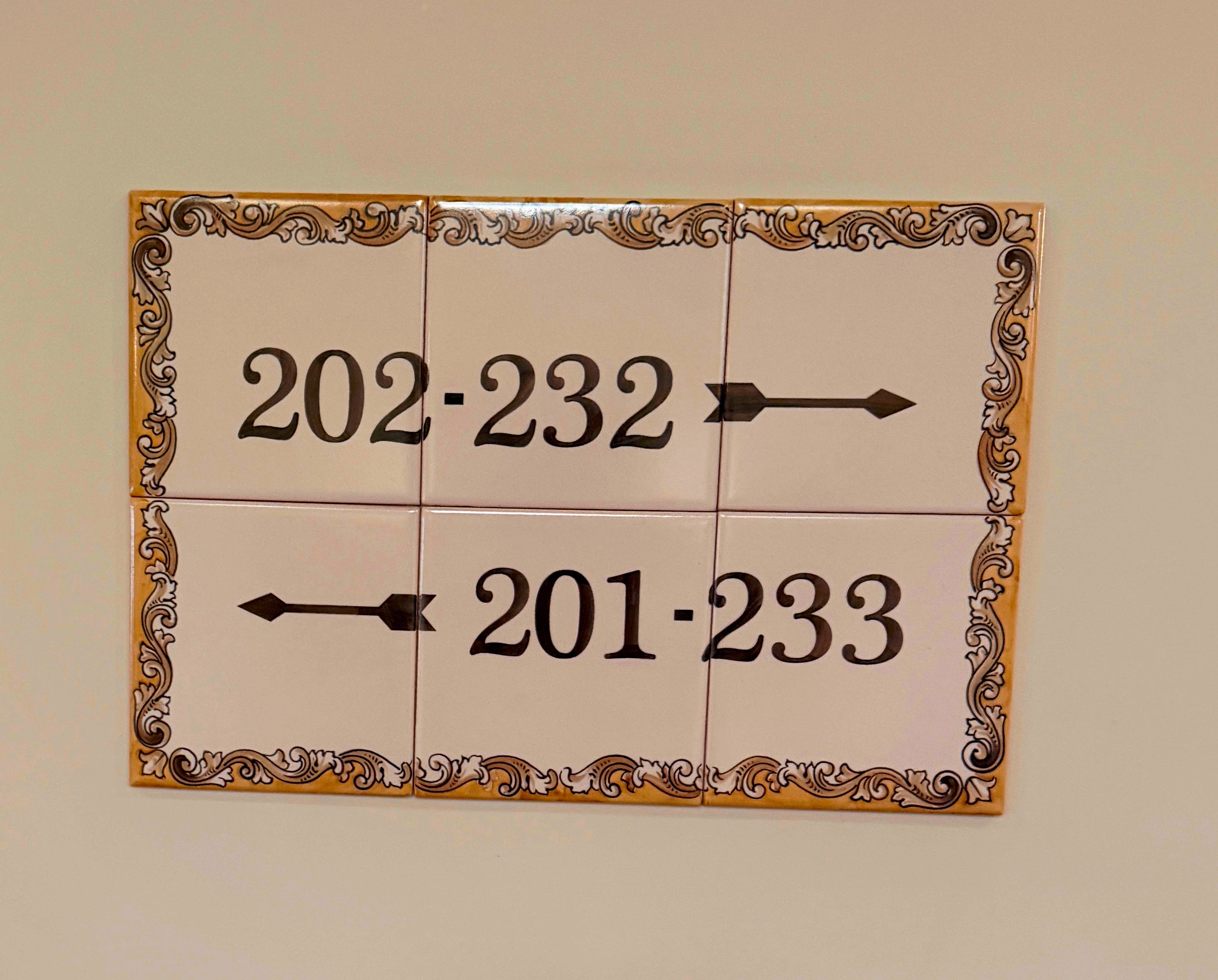
Then you see the hallway sign.
202–232 →
201–233 ←
Perfect. My room is 227. Easy.
I turn right and start the long walk down the hall. Suitcase thumping along behind me. Shoulder bag sliding off every few steps so I keep hiking it back up.
The numbers start appearing on the doors.
202, 204, 206.
Hmm.
Okay. This isn’t quite right…
Then it hits me.
These rooms are even only.
I stop in the middle of the hallway with that slow, dawning realization you get when something obvious finally lands. My room isn’t just farther down the hall. My room is in the other direction.
Which means I get to do the walk of shame back to the intersection, dragging the suitcase the entire way like a tired pack mule.
I get back to the sign and stare at it again.
And that’s when I finally notice it.
The top line. 202–232. All even numbers.
The bottom line. 201–233. All odd numbers.
Technically, the sign is perfectly correct. The information is all there. If you stand there long enough and study it, the system makes sense.
But that’s not how people use hallway signs.
We glance. We scan for the number we care about. The moment our brain finds it, we move.
Which is exactly what I did.
Later I mentioned it to a few friends who stayed at the same hotel.
Every single one of them did the same thing. They saw their number inside the range, picked a direction, and only realized halfway down the hall that something wasn’t adding up.
At that point it stops being a user mistake.
It’s a design mistake.
Leaders do this all the time.
We explain the strategy. We outline the vision. We send the email. We put the slide in the deck. Then when people head in the wrong direction we think, But the information was right there.
Yes. It was.
But clarity is not measured by whether information exists.
Clarity is measured by whether people can actually use it the first time they encounter it.
That hallway sign is technically accurate. It just isn’t designed for how humans move through the world when they are tired, distracted, and hauling luggage.
Most people building strategy decks are standing at the sign studying it.
Most people executing the work are halfway down the hallway already.
Which makes me curious.
Think about the last time a team misunderstood something you thought was obvious.
Did they miss the sign.
Or did they read it exactly the way tired travelers do?
If this resonated, I’d love to hear your story.
Have you ever followed perfectly “clear” instructions that still led you the wrong way?
Drop it in the comments. Those moments are usually where the real leadership lessons hide.
And if essays like this scratch an itch for you, consider subscribing. I write about leadership the way it actually shows up in the wild. Usually somewhere between clarity and the wrong hallway.
I’m also curious if you listen to the audio version, how that resonates for you. Is it worth it to keep making them?
A small ask, if this resonated.
The leaders who read this newsletter tend to know other leaders who would read it too. The people quietly doing the work. The ones who think carefully before they speak. The ones who notice what the room missed.
If someone like that came to mind while you were reading, send this their way.
Every referral unlocks more of what is behind the curtain, exclusive subscriber posts, deeper frameworks, and content I do not share publicly. Build the room with me.