
About halfway through an off-road trail, one vehicle in our convoy got a flat tire.
Not a huge deal at first. Flats happen. Especially out there.
Then someone asked where his spare was.
He didn’t have one.
So what should have been a quick roadside inconvenience turned into thirty or forty minutes of everyone unloading gear, trying to figure out options, and reorganizing the day around a problem that could have been prevented before we even left pavement.
The atmosphere stayed surprisingly patient, at least initially.
Off-road groups are usually incredibly generous with each other. If someone breaks down, people help. That’s just how it works. You carry tools. Recovery gear. Air compressors. Extra water. Half the hobby is preparing for the fact that eventually someone is going to need help, and one day that someone might be you.
So we handled it and moved on.
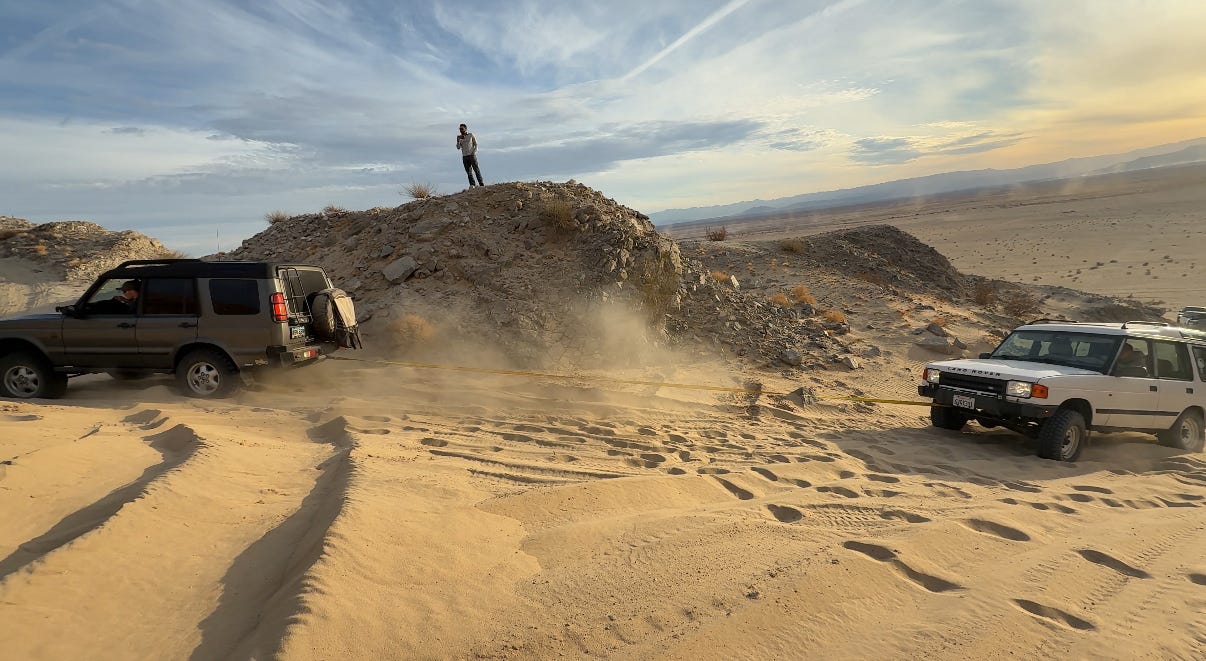
Later that same day, we reached a steep climb. The spotter got out, started directing traffic, and one by one the vehicles worked their way up.
Then the same guy ignored the spotter.
He picked his own line, lost traction, and got stuck badly enough that now the convoy had to stop again and pull him up the hill.
At that point, something shifted a little.
Not outwardly. Nobody started lecturing him over the radio. Nobody pulled him aside for a leadership seminar in the desert because thankfully human beings are not LinkedIn posts brought to life.
But you could feel the energy change.
The delays themselves were not really the issue. Off-roading already takes forever. Everyone expects obstacles, recoveries, slow sections, unexpected problems. That comes with the territory.
What wears people down is preventable repetition.
Especially when everyone else keeps having to absorb the consequences of it.
And that’s the part that reminded me so much of leadership inside organizations.
Most teams are more compassionate than leaders realize. People will help each other through hard seasons. They will cover for someone dealing with stress, grief, illness, transition, or even simple inexperience. Good teams do this naturally without needing speeches about culture and family and whatever slogan got printed on the break room wall this quarter.
But something different happens when the same avoidable problems keep reappearing.
The person creating the issue is often incredibly likable. Sometimes that’s what makes the situation harder to address honestly. They care. They mean well. They are trying very hard.
The guy on the trail was genuinely nice. Everybody liked him.
Which meant people kept focusing on how good his intentions were instead of acknowledging how much extra work the convoy was quietly taking on because of him.
That dynamic exists in organizations everywhere.
Someone misses details consistently, so another employee starts checking their work before it goes out.
Someone comes unprepared often enough that meetings start slowing down around them.
Someone repeatedly creates avoidable fires, and eventually the strongest people on the team just start carrying extra weight without discussing it much anymore.
At first, it feels temporary.
Then one day you realize the team has quietly reorganized itself around one person’s patterns.
That’s when resentment starts building.
Not because people mind helping.
People usually do not mind helping.
What drains teams is the feeling that preventable problems have somehow become permanent group responsibilities.
And leaders sometimes make this worse without meaning to because they confuse being supportive with avoiding accountability.
Those are not the same thing.
A supportive leader helps people improve. A conflict-avoidant leader keeps asking the rest of the team to compensate indefinitely.
There’s a difference.
The hardest part is that these situations rarely involve villains. They usually involve decent people who are not functioning effectively in the role they currently hold. Humans struggle with that distinction because it feels emotionally harsh to separate capability from character.
But organizations pay for that confusion all the time.
Usually through the exhaustion of the people quietly pulling the recovery straps over and over again.
One last thing.
Good leadership writing does not spread the way other content does. It moves through trust. Someone reads it, recognizes it, and quietly passes it to the person they think needs it most.
If that person came to mind for you today, this is your moment.
You unlock subscriber-only essays. They join a community of leaders who think before they react. And Read the Terrain stays in the hands of people who actually use what they read.