
The box said once a month.
That was the whole appeal. A plant that didn’t ask much. A system that would compensate for the fact that I either forget things entirely or suddenly care too much and drown them. It felt like a fix for a personality trait I wasn’t interested in working on.
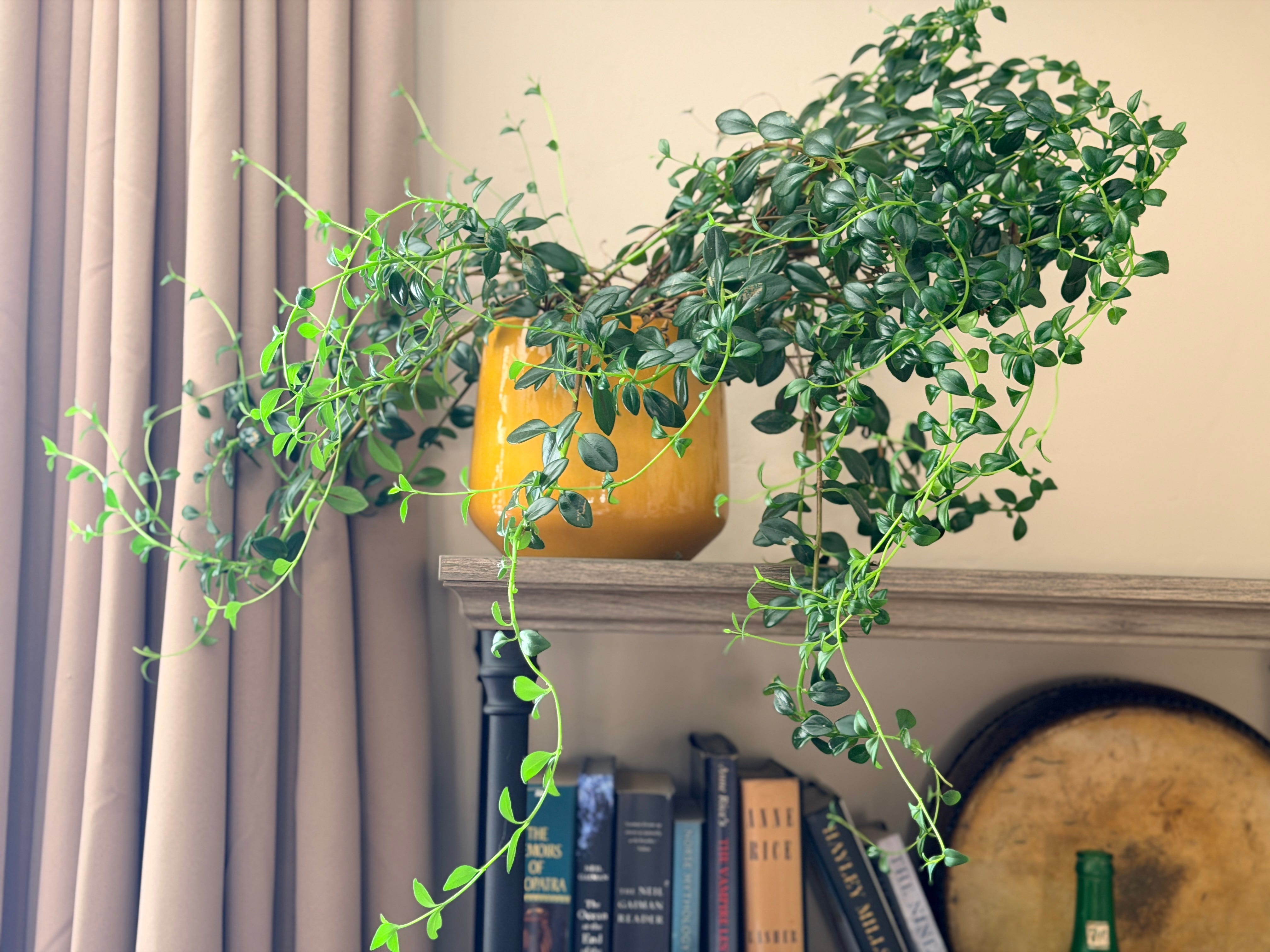
I brought it home like it was a small act of self-improvement.
There’s a kind of relief in thinking you’ve solved something without having to change. Like you’ve outsmarted your own habits. I set it near a window, filled the reservoir, and told myself this was the version of me who keeps plants alive.
For a few weeks, it worked. Or at least it looked like it did. The leaves stayed green. Nothing dramatic happened. Which is usually the standard we use to declare success.
And then I started noticing the other variables. Not all at once. Just enough to be annoying.
The light shifted in the afternoons. The spot I picked wasn’t as consistent as I thought. My cat took an interest in the leaves in a way that felt personal. One day the soil looked dry even though it technically wasn’t time yet. Another day it looked fine, but the leaves were all facing a different directions, searching for light.
The system was still doing its job. Once a month. Exactly as promised.
It just wasn’t enough.
I kept wanting the instructions to be the thing that mattered most. I paid for them to be. But the plant didn’t care about the agreement I made with the packaging. It was responding to everything else. The parts that weren’t standardized. The parts that required me to actually look at it, not just manage it.
That’s the part I was trying to avoid.
Because paying attention is harder than following a rule. It doesn’t have a schedule. It asks for small decisions that don’t feel important until they are. It’s easier to trust something external to carry the responsibility so you don’t have to keep checking in with yourself.
That instinct shows up in other places.
You see it in the way teams run on meeting cycles that feel productive but somehow miss what’s actually happening. In check-ins that happen because it’s Monday, and not because anything needs to be surfaced. In systems that were built to create clarity but slowly become the thing everyone hides behind.
On paper, it all looks solid. There’s a rhythm. There’s structure. No one is technically doing anything wrong.
And still, something starts to drift.
A person disengages a little. Not enough to flag, just enough to feel different. A project slows down in ways no one names. The energy in the room shifts, but the agenda stays the same. Everything continues, right on schedule, like the system is proof that things are fine.
It’s not that the system is broken. It’s doing exactly what it was designed to do.
It just can’t notice.
That part doesn’t scale. It doesn’t automate. It doesn’t show up in a dashboard or a cadence. It lives in the small, inconvenient moments where you have to pause and decide whether what you’re seeing matches what you expected. And then adjust, even if it means ignoring the plan you set for yourself.
The plant is still in my house. I’m not sure if it’s thriving or just living, but it’s doing something.
And I still like the idea of once a month, calendared, routined. I probably always will. There’s something comforting about believing you can reduce care down to a single, manageable action.
But that’s not really how care works.
You can simplify the task. You can’t outsource the attention.
And it turns out, that was the thing I needed to learn, not how often to water it.
Before you go.
If this essay said something you have been trying to put into words, the most useful thing you can do for someone else who needs to hear it is share it.
Read the Terrain grows when leaders pass it to other leaders. Not through algorithms, not through ads, just one quiet recommendation at a time.
You will earn access to subscriber-only content the more people you bring along. They get something worth reading. You get acknowledged for being the person who sent it. Everyone wins.