
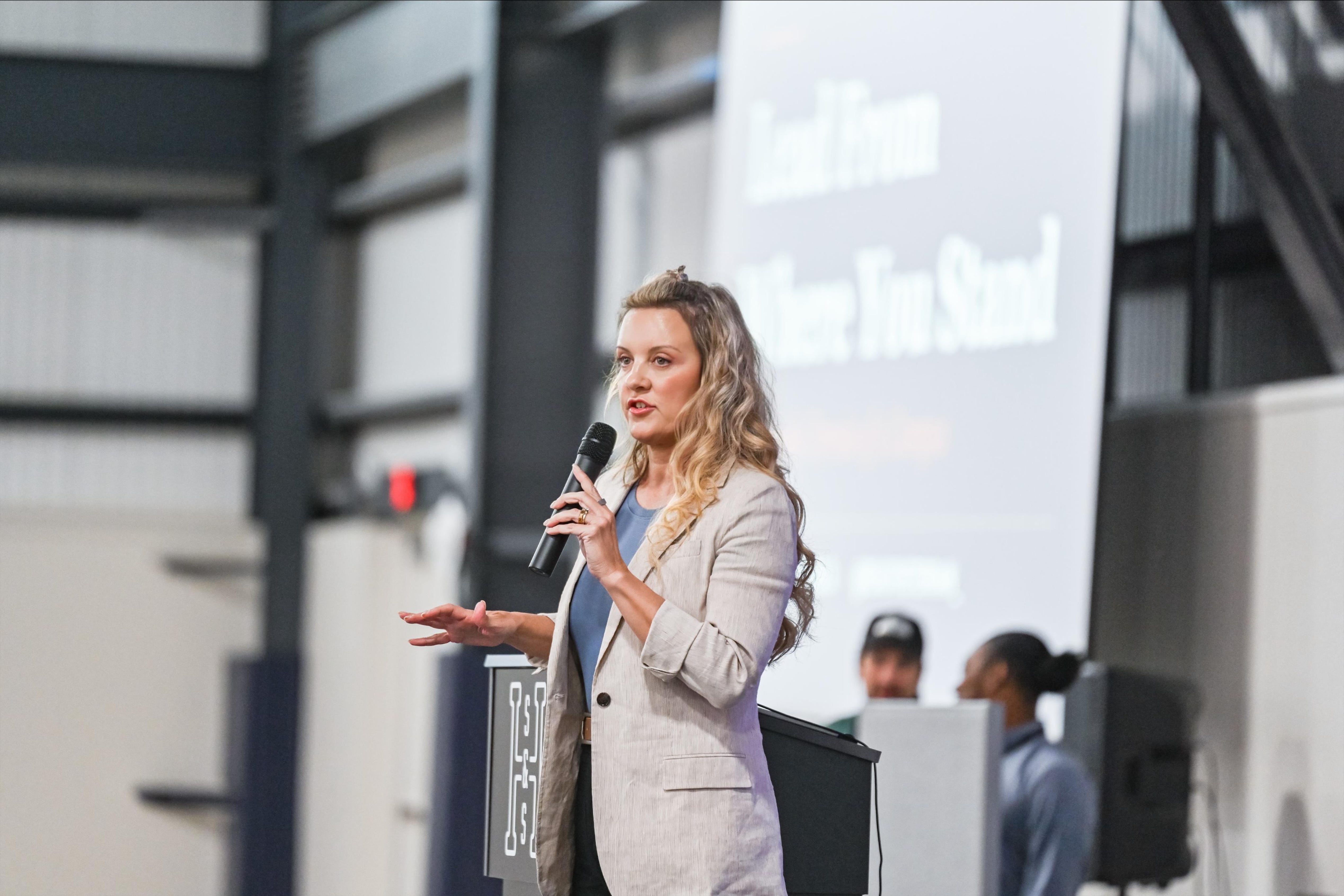
Last Tuesday I spent the day with school counselors in Clark County.
If you found me through last week’s session in Clark County, welcome. I’m glad you’re here.
I was honored to spend a day last week with 700 school counselors, talking about what it means to be the spotter on a campus. The spotter stands on the ground and reads what the driver can’t see from the seat. Spotters never touch the wheel, and they lead anyway.
This week I want to talk to the drivers.
There’s a rule on the trail I didn’t put in the talk. If you lose sight of your spotter, you stop. The last signal you got doesn’t count anymore. Neither does your guess about why they stepped away. You sit still until you can see their hands again.
At work, most of us do the opposite. The people who used to flag things go quiet, and we read the quiet as smooth ground. Fewer concerns come up in the meeting. Fewer emails start with “I’m noticing something.” It feels like progress.
Sometimes it is. Sometimes your spotter has moved somewhere you can’t see them. Maybe they got tired of pointing at rocks nobody steered around. Maybe they flagged something once and paid for it.
And some of them you may never have seen at all. One counselor wrote on her feedback form, “We can have spotters out there that we aren’t even aware of.” So the quiet could be coming from someone you didn’t know was reading the ground for you.
Either way, the silence tells you about your sightline. It doesn’t tell you anything about the ground yet.
Before the next foot of trail
This is the idea at the center of my book, Read the Terrain: diagnose before you direct. Silence counts as a condition too, and it deserves the same read as any rock in front of you.
When your spotters go quiet, stop the truck and go find their hands.
A question for you
Who might be reading the ground for you without you knowing it?
Hit reply. I’d like to hear it.
Laura