
It was 45 degrees, and I was standing at the edge of a river in shorts.
Nobody asked me to do this. One of our rigs had come out of the crossing at Monache Meadows minus its license plate, and the plate was sitting somewhere in water that was knee-high and cold enough to make you rethink your life. So I volunteered, because I’m the person who volunteers. I changed into shorts, waded in, and made it almost to the middle, every step a negotiation with my own shins, when one of the drivers rolled his rig into the river, leaned out the door, and plucked the plate out of the water like he was grabbing the mail.
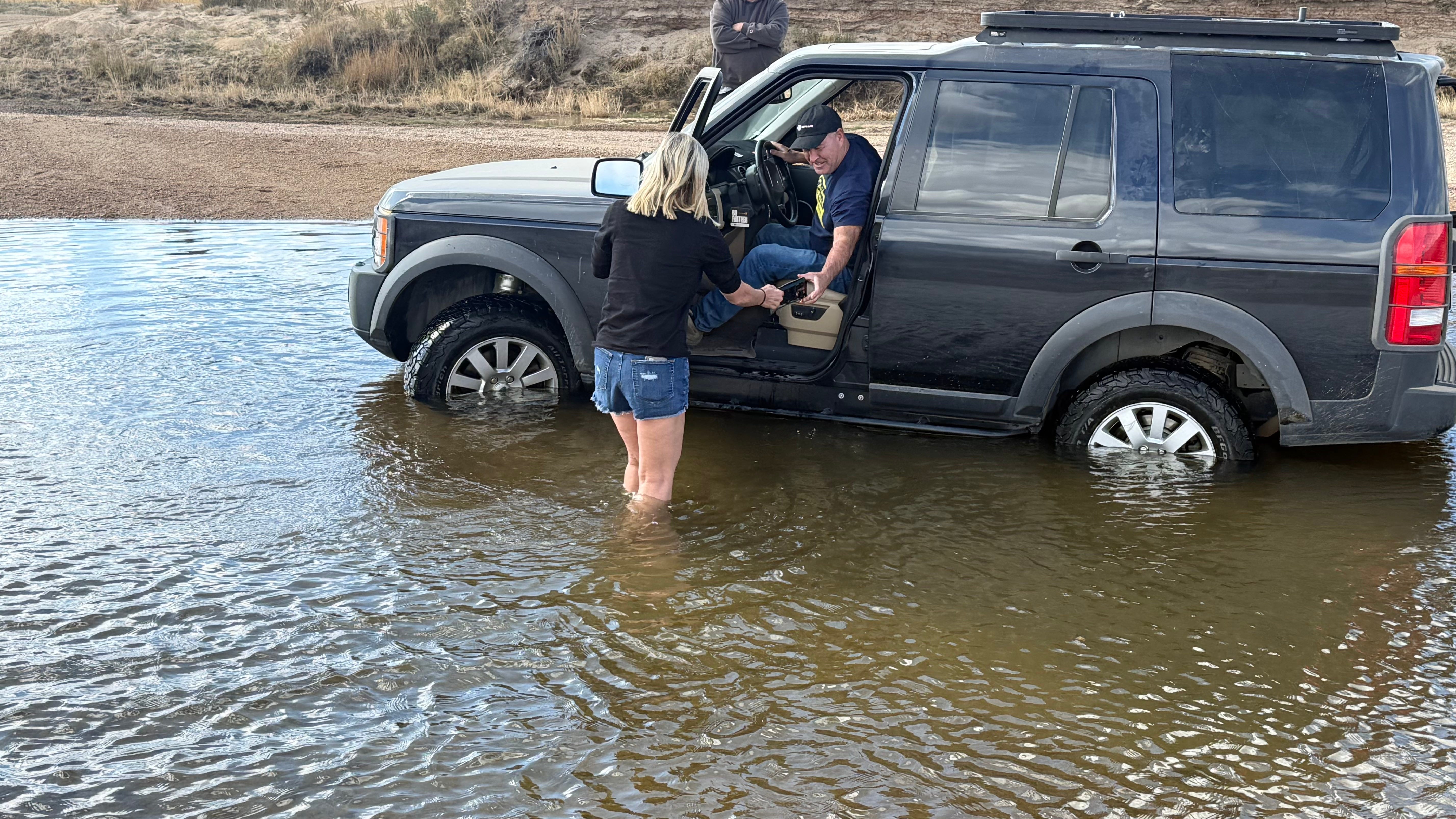
There were a dozen of us that weekend from the So Cal Rover Club. Some are friends. Some I’d never run with before, which is one way to get to know people (I recommend a less frigid one).
There should have been more of us. The week before the trip the weather was HOT, around a hundred degrees, then the forecast turned to rain and cold, and a few people canceled. They thought the trail could get unruly and that it was more than they wanted to take on. That’s a fair call.
But the rain never came. The trees had turned, the river was running, and it was the kind of weekend you try to describe afterward and end up showing people pictures instead.
Two rigs still overheated, coolant both times. Both times the group did what this group does: gathered around an open hood and improvised until it worked. Both rigs made it home.
I wasn’t the fix for any of it. I was the one with the camera, yelling “woohoo, you’ve got this, isn’t this fun” at people working their way over ruts, taking pictures while somebody else figured out a cooling system. I loved it. I loved not being the one.
I also spent more of the weekend than I’d like to admit fighting the urge to step in. Not because anything was wrong, but because people were doing things differently than I would have. Everything was fine. I was having a great time. And part of me was still standing at the edge of the river, waiting for my turn to fix it.
Maybe that’s what the plate was about. I waded in to solve it my way; someone else solved it from the driver’s seat, and the plate came back either way.
I’ve thought a lot this week about the people who stayed home. Not because they were wrong, but because they made the call off the forecast, and the forecast turned out to describe a different weekend than the one we got. Leaders do this constantly. We decide off the projection, the rumor, how it went last time. And when a hard week follows a decision we did make, we treat the hard week as the verdict. Two breakdowns didn’t mean we shouldn’t have gone. They were part of going.
“A good leader reads the situation they’re actually in, not the one they remember.”
From Read the Terrain, Chapter 5
Try this week
Find one decision you’re making off a forecast: a projection, a prediction about how someone will react, how it went last year. Write down what you’d need to see to know the real conditions.
Go look. Have one conversation, do one walk-through, or ask the one question you’ve been assuming you already know the answer to.
If something goes sideways on a call you already made, ask before you retreat: did the decision fail, or did the terrain do what terrain does?
The next time someone handles something differently than you would, ask yourself one question before you step in: is it wrong, or is it not how I’d do it? If it’s the second, keep your hands off the wheel.

A question
What are you staying home from because of a forecast?
I turned this weekend into a three-part video series on Instagram and YouTube: the people who stayed home, the breakdowns, and why my job was the camera.
The Book
Read the Terrain: Leadership Under Real Conditions is built on this kind of reading: name the pattern you’re stuck in, then do something about it on Monday. Paperback and ebook come out November 2, and the Kindle preorder is open now.