
Watching my husband weld is one of the clearest lessons I know in what competence feels like up close.
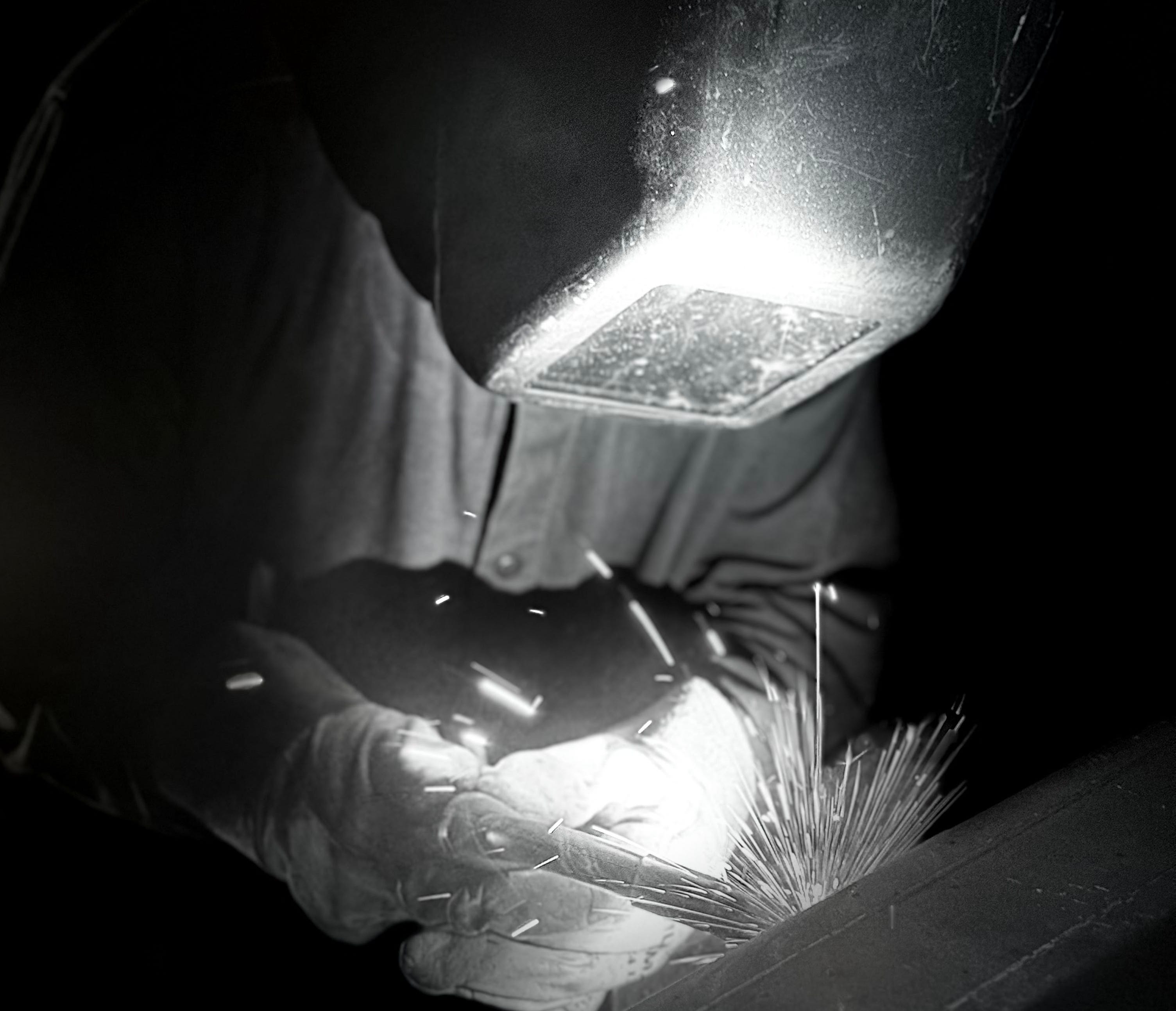
If you’ve ever stood close enough to feel the sparks, you know what I mean. Metal that has no business holding suddenly does. A line that looks rough from a distance settles into something clean and permanent. It’s satisfying in a way that’s hard to explain, but it’s also something more than satisfaction. What you’re watching is judgment made visible. Knowing exactly where to place the heat. How long to hold it. When to move before the whole thing gives way.
There’s a term for this: competency porn. Screenwriter John Rogers coined it in 2009, that very specific pleasure of watching someone handle a complex situation with real expertise. Think surgical teams, heist movies, anyone who makes something genuinely hard look almost boring.
The feeling it produces is trust. Or something close to trust. Borrowed trust, maybe.
You’re leaning on someone else’s competence as if it were your own. Their certainty becomes your calm. Their judgment becomes your confidence that the structure will hold. And because that feeling is so immediate and so natural, it’s easy to miss what’s actually happening: trust is being created, but capability isn’t being transferred.
This shows up in organizations constantly. And it gets mistaken for something else entirely.
Not the skilled work itself, the response to it.
The room changes when the right person walks in. The conversation shifts. Questions stop. Everyone relaxes into the assumption that the problem is now in capable hands. And sometimes that’s exactly right. Sometimes that’s exactly what’s needed.
But there’s a cost to this that doesn’t show up right away.
When one person becomes the place where uncertainty goes to die, everyone else gets a little less curious. A little slower to step in. A little more comfortable with waiting. Admiration can look like respect, and often it is respect, but repeated admiration quietly does something: it concentrates capability into one set of hands while everyone else drifts just far enough back to stay dependent.
Nothing breaks. That’s the problem.
The work gets done. Deadlines get met. Problems get solved cleanly enough that nobody feels much urgency to understand how the solution happened. The organization looks healthy. Functions fine. Has no particular reason to examine itself.
Until the torch isn’t there.
Until the hands that knew where to place the heat aren’t in the room anymore.
And then it becomes obvious, what looked like organizational strength was sometimes just proximity to someone competent. The difference between those two things doesn’t show itself until the person is gone.
That’s the part that’s easy to miss while everything still seems fine.
One last thing.
Good leadership writing does not spread the way other content does. It moves through trust. Someone reads it, recognizes it, and quietly passes it to the person they think needs it most.
If that person came to mind for you today, this is your moment.
You unlock subscriber-only essays. They join a community of leaders who think before they react. And Read the Terrain stays in the hands of people who actually use what they read.
This dynamic is especially crucial for leaders, whose core function is to absorb ambiguity on behalf of the team.
When a real leader walks into a room full of uncertainty, the room relaxes because the ambiguity has been taken on by someone else.
That is the job working as intended.
The problem is what happens next: as soon as the leader steps away, everyone wakes up from the dream and the uncertainty flows right back to where it was.
The real test of leadership is whether the team can do more than they could before the leader stepped in the first time, without him being there.
If the answer is no, it was just a one-man show wearing a leadership label.
Thanks for writing this!